
After the Credit Pull: What Brokers Should Tell Borrowers About Trigger Leads
“I just started getting calls from other lenders. Did you send my information?” A borrower may ask this minutes after a credit inquiry. The timing feels personal, and the answer can either preserve trust or make the borrower wonder whether the mortgage process is exposing more than they agreed to share.
Mortgage trigger leads have been in the news because a federal law changed who can receive certain leads generated when a credit reporting agency gets a mortgage-related credit request. For independent brokers, the useful response isn’t a blanket assurance that the calls will stop. It’s a clear explanation of what changed, what the law doesn’t promise, and how the borrower can shop for a loan intentionally.
What the new law changes
The Homebuyers Privacy Protection Act amended the Fair Credit Reporting Act. Under the new restriction, when a consumer reporting agency receives a report request connected with a residential mortgage transaction, it generally can’t furnish a related trigger lead to another person for a firm offer of credit unless a statutory exception applies. The exceptions include a party with the homebuyer’s documented authorization, the originator or servicer of the consumer’s current residential mortgage, or an insured bank or credit union where the consumer has a current account.
The law took effect in March 2026. In its October 2026 review, the U.S. Government Accountability Office said it was still too early to measure how the restrictions have affected homebuyers. That caveat matters. The rule narrows access to a particular kind of lead; it doesn’t establish that every unexpected call is a violation, or that no borrower will receive mortgage marketing after applying.
For the statutory language, see the Homebuyers Privacy Protection Act, Public Law 119-36. The GAO’s October 2026 trigger-lead review summarizes the exceptions and the limits of what can be concluded so soon after implementation.
What to say when a borrower asks
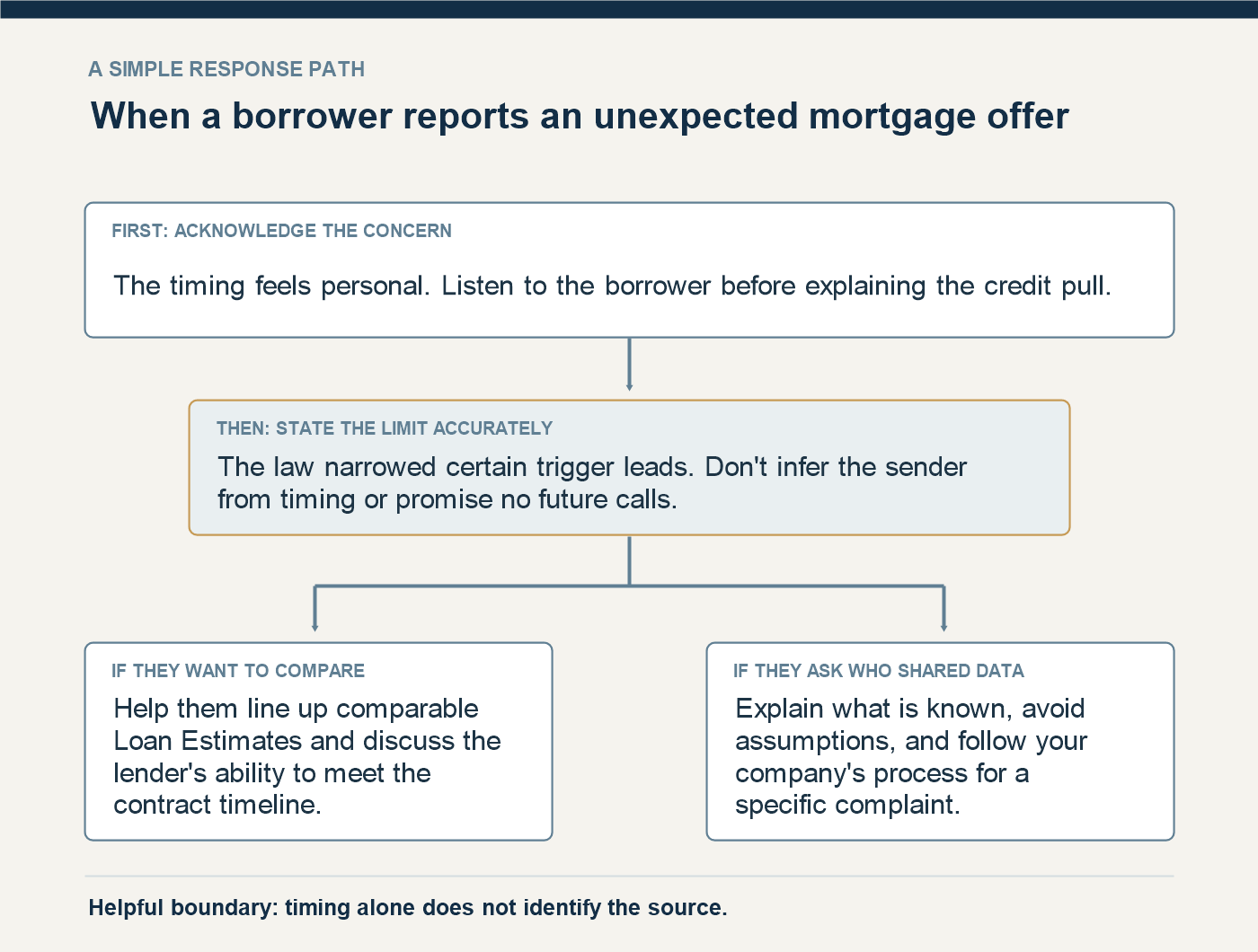
Start with the concern, not a defense of the credit pull. You can acknowledge that unexpected offers are unsettling, then separate what you know from what you don’t. A script might sound like this:
“I understand why the timing caught your attention. The law now limits when credit bureaus can provide mortgage trigger leads, but it doesn’t prevent every kind of marketing call. I can’t identify the source from timing alone. If you’d like to compare mortgage offers, we can talk through options you choose and what each one means for your timeline.”
That wording avoids two common missteps: telling the borrower that a lender sold their data without evidence, or promising that the new law means the borrower won’t be contacted. It also leaves the borrower in control. If they want to compare options, help them understand what is being compared rather than treating every inbound offer as a reason to switch immediately.
Keep comparison shopping deliberate
The law doesn’t remove the value of shopping. The CFPB recommends requesting and comparing Loan Estimates from multiple lenders once a borrower has a specific home in mind. A useful broker can help the borrower compare the same loan type, term, down payment, points or credits, and property assumptions—and then account for the lender’s ability to meet the contract schedule.
That’s a different experience from a surprise call with an offer the borrower can’t easily validate. If a borrower wants another quote, ask what they hope to learn: a lower cost, a different program, a second opinion on eligibility, or simply reassurance that the current terms are competitive. A focused question makes it easier to decide whether another conversation is worth the extra paperwork and timeline coordination.
The CFPB’s guide to requesting and reviewing multiple Loan Estimates offers a plain-language comparison checklist you can share. The borrower should be comparing a real scenario with consistent assumptions, not just two advertised rates.
A small workflow adjustment can prevent a bigger trust problem
Consider adding one short explanation to your application or credit-authorization conversation. Tell the borrower why credit is being requested, what role the report plays in the loan review, and how to reach you if an unexpected offer causes concern. Don’t imply that the credit bureau will or won’t furnish a lead in the individual case; the eligibility question depends on the statutory criteria and facts you may not have.
If the borrower forwards a call or text, ask what it says and whether they recognize the company. Keep the response factual. Avoid diagnosing the source from timing alone, asking the borrower to click an unfamiliar link, or declaring a legal violation based only on a screenshot. If they want to explore consumer opt-out tools or make a complaint, point them to the relevant official consumer resource rather than improvising legal advice.
State rules can add another layer. GAO notes that some states require disclosures in certain trigger-lead solicitations. Those requirements can differ by state and by who is making the contact, so a broker should follow their company’s compliance guidance and confirm applicable state requirements instead of copying a one-size-fits-all script.
These conversations are part of a broader file handoff: a borrower should know what the team is requesting, why, and what will happen next. EPC’s contract processing services are built around organized files and clear communication.
If you’d like to talk through your intake or borrower-update workflow, book a 15-minute EPC strategy call.
Educational disclaimer
Educational note: This article is general information for mortgage professionals, not legal, compliance or underwriting advice. Guidelines change; confirm current requirements with the agency and your lender.